How Small Creators Can Get Into YouTube's Suggested Feed

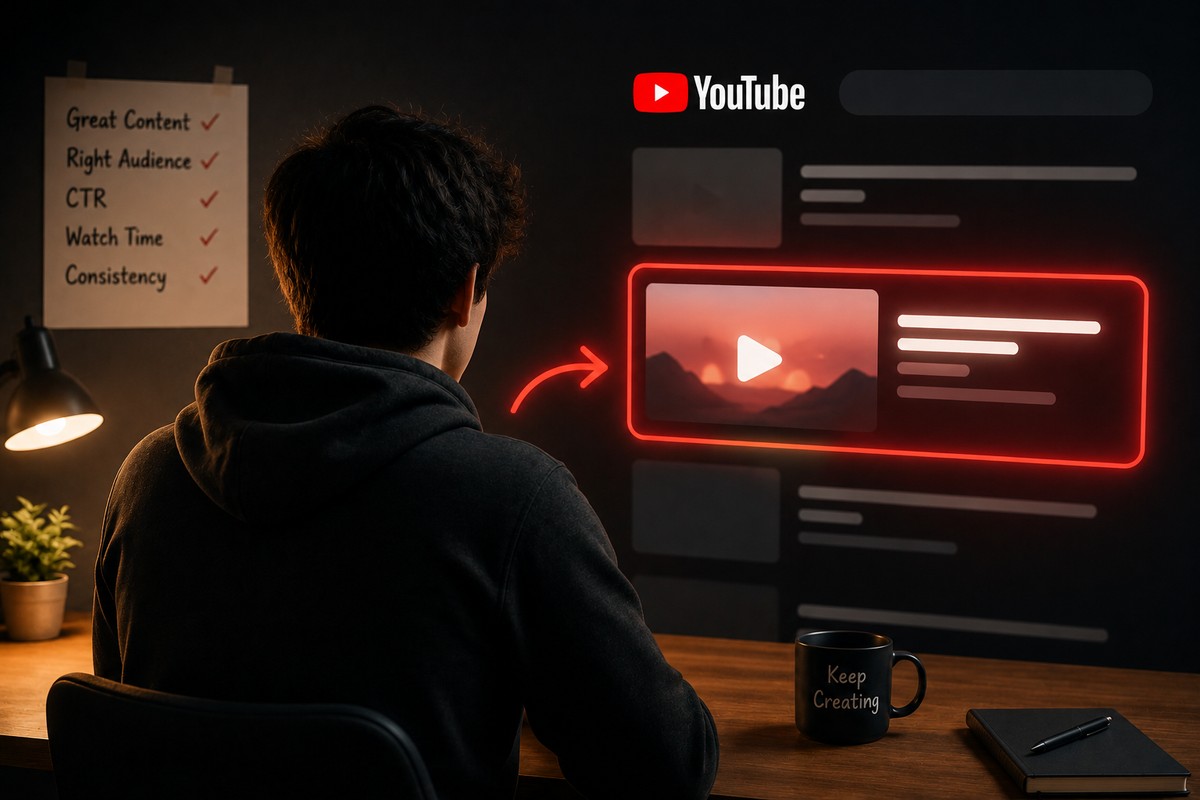
The suggested feed isn't a popularity contest
I used to think the suggested feed was only for massive channels. I was wrong. It rewards relevance. YouTube doesn't care about your subscriber count; it cares about keeping people on the site. If your video keeps a viewer watching longer than a channel with 500k subscribers, YouTube will push yours. That is the whole game, as YouTube's recommendation system is designed to pair content with what viewers are already watching.
The sidebar and auto-play sections drive most watch time. For small creators, this is your main discovery engine. It beats search and your own subscriber list. Mastering this turns a channel stuck at a few hundred views into one that grows on its own.
Understand what the algorithm measures
YouTube doesn't watch your video; it watches your viewers. It tracks a few key signals to decide if your content is worth recommending, as outlined in official guidance on key growth metrics:
- Click-through rate (CTR): The percentage of people who click your thumbnail.
- Watch time: How long people stay.
- Audience retention: Where people drop off and where they stay engaged.
- Satisfaction signals: Likes, comments, shares, and the "not interested" button.
You control CTR and retention. High CTR gets the click. Strong retention proves the click was worth it. When both work, YouTube tests your video against similar content. It starts with a few hundred impressions. If people click and stay, the test expands. That is how you break in, often through watch history clusters.
Your thumbnail is the bottleneck
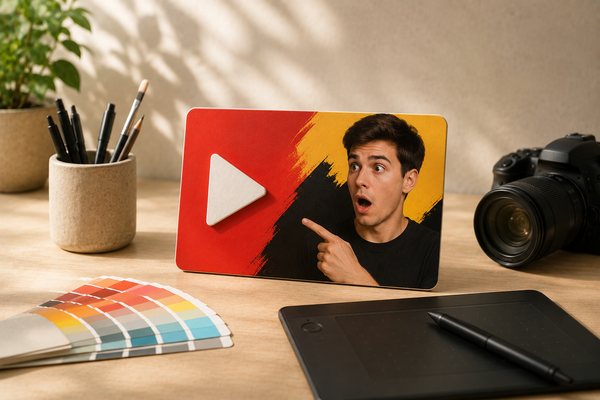
In the suggested feed, your thumbnail does the heavy lifting. A 4-10% CTR is solid. Hitting that is a packaging problem, not a content problem.
Make your thumbnails work by focusing on these elements:
- High contrast: Use bold colors that pop against the interface.
- A clear focal point: Stick to one face or object. Avoid clutter.
- Minimal text: Don't repeat your title. Use text to add context.
- Emotional hooks: Use curiosity or surprise to stop the scroll.
Most creators design based on gut feeling. You spend 20 minutes in Canva and hope for the best. But what you like and what strangers click are rarely the same. You can use tools like BerryViral for a more reality based feedback on your thumbnail's clickability.
What good retention looks like
Benchmarks vary. The average retention for a YouTube video is about 23.7%. If you hit 40-50% on a video longer than five minutes, you are doing great. For videos under five minutes, aim for 65-75%.
The biggest problem? 55% of viewers leave within the first 60 seconds. You have about eight seconds to hook them. Stop the "Hey guys, welcome back" intros. Start with the most interesting part of the video immediately. Use cuts, graphics, or pace changes every minute to keep their attention.
Track your stats, but don't obsess
You cannot improve what you do not measure. Use YouTube Studio to watch your Reach and Engagement tabs. Look at your "Traffic source: Suggested videos" metric. If that number is low, your CTR or retention is the bottleneck.
When you find a winner, reverse-engineer it. What was the CTR? What was the topic? Make more of that. Check these stats weekly. Daily checking just creates anxiety.
Post when your audience is there
Posting when your audience is online helps your video get early velocity. If your CTR and watch time are strong in the first few hours, the algorithm pushes the video to a wider audience.
Most data points to 3 PM to 5 PM local time as a sweet spot, with 4 PM being optimal, and Wednesdays being strong for long-form content. However, your own data in YouTube Studio under Audience > When your viewers are on YouTube is the only source that matters. Use that to set your schedule.
Use collaboration to borrow trust
Collaborating with creators in your niche is a shortcut to growth. When their audience watches you, YouTube learns to associate your channel with theirs. It starts recommending your videos to their viewers.
Don't just email people asking for a collab. Lead with value. As noted in strategies for YouTube collaborations in 2026, propose a specific idea that helps their audience. Engage with their content for a few weeks first so you aren't a stranger. A single successful collaboration can provide a sustained bump in suggested traffic because it introduces you to a pre-qualified audience.
Niche consistency is a multiplier
If you cover cooking one week and gaming the next, YouTube has no idea who to show your videos to. You are resetting the algorithm every time you switch topics. Your content should appeal to the same type of person. If a viewer watches one video, they should logically want to watch another. That session behavior is a massive signal to the algorithm.
Consistency beats frequency
One great video per week is better than three rushed videos. Consistency trains your audience and the algorithm. It gives you a steady stream of data to analyze. Pick a schedule you can keep for six months. Growth on YouTube isn't linear; it’s a series of flat periods followed by sudden spikes. The people who win are the ones who keep publishing during the flat periods.
Putting it all together
Getting into the suggested feed isn't a loophole. It is about sending the right signals: a thumbnail that earns the click, an intro that earns the watch, and content that earns the retention. Audit your last five videos. If your CTR is under 4%, fix your packaging. If your retention drops in the first minute, fix your intro. Earn the algorithm's trust on a small scale, and it will eventually scale you up.