Why High Retention Doesn't Guarantee YouTube Views

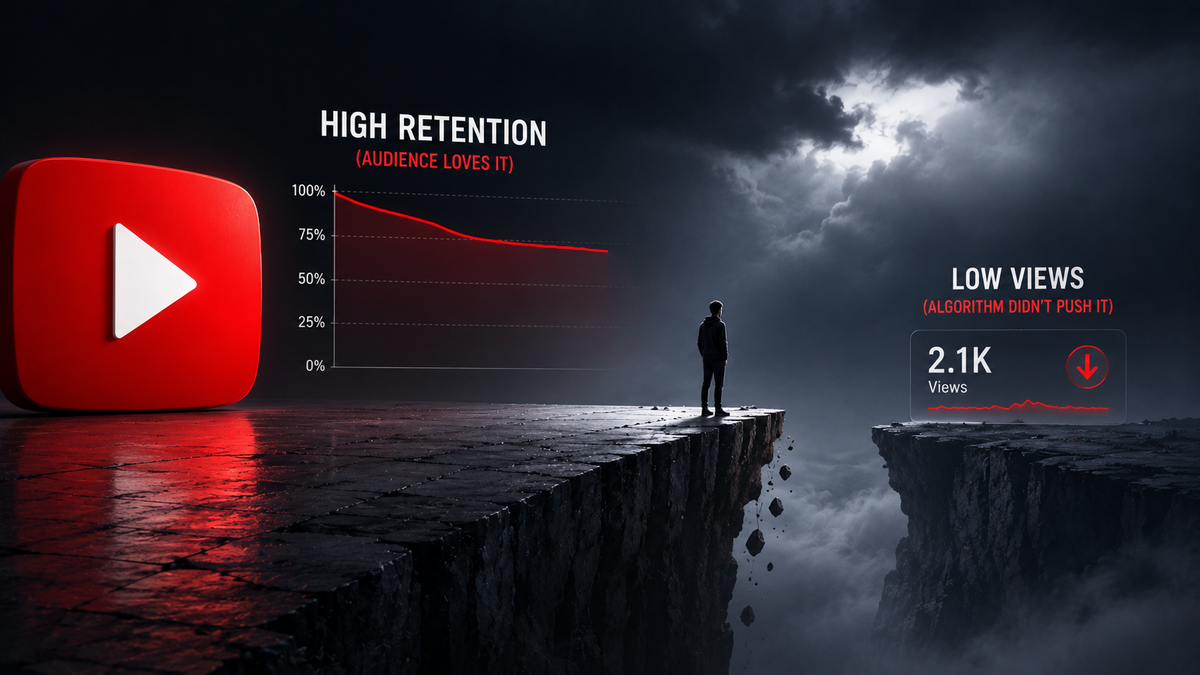
Your retention is great. Why are your views flat?
You check YouTube Studio and the numbers look solid. People who watch your videos stick around. Your retention graph is smooth and your average view duration is high. You did everything the experts told you to do. Yet, your views aren't moving.
This is a frustrating wall to hit. The advice you received wasn't wrong; it was just incomplete. Retention matters, but it doesn't get you views. Here is what does.
The retention myth
Retention correlates with views, but it doesn't cause them [1]. It only measures how well you kept the people who already clicked. It says nothing about how many people saw your video or whether they clicked in the first place.
There is no direct link between retention and total views. The real drivers are the topic, the thumbnail, and the title. You could make the best video of your life, but if your thumbnail is dull, nobody clicks. If nobody clicks, YouTube has no data to work with. Your masterpiece sits in the dark.
CTR: The gatekeeper
Click-Through Rate (CTR) is the percentage of impressions that turn into views [2]. Without clicks, your retention and watch time don't exist.
YouTube looks for a mix of high clicks and sustained watch time, often evaluating what is known as "Quality CTR" [3]. If you get high clicks but everyone leaves in 30 seconds, YouTube penalizes you. It assumes your thumbnail was clickbait. You need to get clicks from the right people and then deliver on your promise.
Anything below 3% needs work. 4–5% is solid. Above 7% is great [4]. If you have 60% retention but a 1.5% CTR, your thumbnail is the problem, not your video.
The impressions problem
Before someone clicks, they need to see the video. This is the impressions stage. When you upload, YouTube tests your video with a small sample of people. If they engage, YouTube expands the reach. If they don't, the video dies.
If your impression counts are low, the algorithm doesn't know who to show your content to. This happens if your topic is unclear, your channel lacks a consistent niche, or your previous videos underperformed. Low impressions mean low opportunity.
Design for the stranger
YouTube tests your video with cold audiences, not just your subscribers. Subscribers trust you; they might click out of habit. Cold viewers have no context. They see your thumbnail in a sea of others and decide in half a second if you are worth their time.
If cold viewers click and leave, YouTube cuts your impressions. This is why a video can have great retention among your fans but still fail to grow. Stop designing for your fans. Design for the stranger who has never heard of you.
The first 30 seconds
The first 30 seconds must validate the click. A steep drop-off here tells YouTube your video failed to deliver on the thumbnail's promise. Avoid long intros, recaps, and slow teasers. Start the video immediately. If the viewer feels bored or misled, they leave—and your momentum dies.
What your stats are actually telling you
- High retention, low views, low impressions: Your thumbnail and title aren't compelling enough for the algorithm to test.
- High CTR, low retention, declining impressions: You are likely using clickbait. Your video isn't delivering on the promise.
- Low CTR, decent retention, moderate impressions: People who find your videos like them, but you aren't attracting enough new clicks. Fix the thumbnail.
- Low impressions across the board: The algorithm isn't testing you. You may have a consistency or topic relevance issue.
What actually moves the needle
- Topic selection: People must care about the subject. No amount of editing fixes a topic nobody wants to watch.
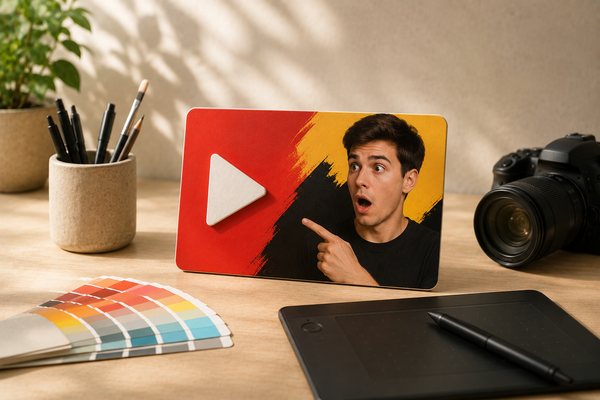
- Thumbnail clickability: This is your biggest lever. Use high-contrast colors and clear faces [4].
- Title clarity: Create curiosity without being vague.
- Opening hook: Validate the click in the first 10 seconds.
- Alignment: Ensure the thumbnail, title, and video content match.
The thumbnail is the problem you won't admit
Most creators underinvest in thumbnails. They spend hours editing the video and five minutes on the packaging. That is a mistake. Your thumbnail is the first piece of content a viewer sees.
If you need help, BerryViral rates your thumbnails for clickability and offers specific fixes like contrast adjustments or text sizing. It provides the kind of fast, data-backed feedback that usually takes years to learn.
Putting it all together
Retention is necessary, but it isn't enough. The chain of growth is simple: your thumbnail and title trigger a test. The sample audience clicks. Your opening hook keeps them there. Your retention signals to YouTube that they should show the video to more people.
If you break the chain at any point, you stall. Stop treating your thumbnail like an afterthought. It is the reason people show up in the first place.