YouTube Search vs. Browse: Why You're Missing Growth & How to Fix It


Your traffic sources tell a story
Open YouTube Studio and check your Reach tab. Look at "How viewers find your videos." If YouTube Search makes up most of your traffic while Browse Features sits in the single digits, pay attention. That gap explains why your channel is stuck.
What these traffic sources actually are
YouTube routes views through three main systems:
- YouTube Search: High-intent. Someone types a query and clicks your video because you answered their question. Search traffic is high intent, but it is limited by the volume of people actively looking for your specific keywords.
- YouTube Browse Features: The algorithm at work. This includes the home feed and subscriptions. The viewer didn't search for anything; the platform chose to show your video. This is the most direct signal of algorithmic endorsement available.
- Suggested Videos: The panel next to or after another video. YouTube shows your video to someone watching something related. Suggested videos are contextual and rely on your ability to keep a viewer in a session.
Search traffic is capped by how many people look for your keywords. Browse traffic is uncapped. It scales with how much the algorithm trusts your content.
What high search, low browse means
If 60% of your traffic comes from search and browse is below 15%, you are a library. People find you when they look for something, but the algorithm isn't pushing your content to people who didn't know they needed it. Search volume is finite. Once you rank well, your traffic plateaus. Browse traffic reaches people who didn't know they were interested in your topic. That is how channels go from steady to explosive.
If your search impressions are high but browse is low, the algorithm is saying: "Your SEO is solid, but I don't trust your content enough to push it to cold audiences."
Why the algorithm holds back
The algorithm is conservative with browse impressions because it is betting its own real estate on your video. If the viewer doesn't click, or clicks and leaves in 30 seconds, that hurts your standing.
It looks for two things:
- Click-through rate (CTR): Do people click the thumbnail? A low CTR means your packaging isn't compelling enough for a cold audience.
- Viewer satisfaction: Do they finish the video? Do they come back? Low retention signals that your content didn't deliver on its promise.
Search traffic masks weak performance. People searching for your topic are already motivated to click. Your numbers might look fine, but your content might not survive on the home feed where the bar is higher.
The thumbnail problem
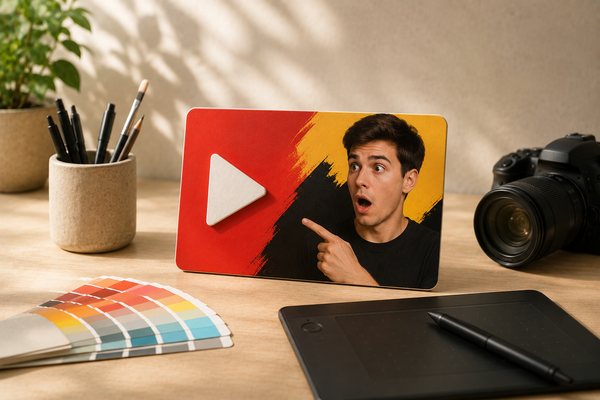
If you want browse traffic, you have to fix your thumbnails. On the search page, the viewer is motivated. Your title does the heavy lifting. On the home feed, the thumbnail is everything. A viewer scrolling is passive. Your thumbnail has a fraction of a second to interrupt that scroll.
Channels with strong SEO often have a thumbnail problem. Their designs are descriptive rather than arresting. Browse thumbnails need high contrast, clear expressions, and curiosity-driven text. They must earn a click from someone who wasn't looking for you.
Tools like BerryViral can help. Upload your thumbnail to check for contrast, lighting, and legibility. Getting an objective read on your packaging is the first step to fixing the browse gap.
Retention is the other half
Fixing thumbnails gets the click. Retention keeps the viewer. If viewers leave in the first 30 seconds, the algorithm stops testing your video.
Use the "Hook, Hold, Handoff" framework:
- Hook: Validate the click in the first 30 seconds. Tell the viewer why it is worth their time.
- Hold: Keep the pacing tight.
- Handoff: End the video in a way that leads them to watch more of your content.
How to diagnose your situation
- Go to Analytics, then Reach, then Traffic Sources.
- Check your overall CTR. Anything below 4% on browse surfaces is a red flag.
- Look at audience retention, specifically the drop-off in the first 30 seconds.
- Check if your browse traffic has been flat over the last 90 days.
A practical path forward
- Audit your thumbnails: Look at your last 10 uploads as a stranger. Do they stop the scroll?
- Strengthen your hooks: Stop the long intros. Get to the value immediately.
- Narrow your focus: If you cover too many topics, the algorithm doesn't know who to show your videos to.
- Publish consistently: The algorithm needs data to build a model of your audience.
- Use search as a signal: Your search traffic shows you what people want. Use those topics to create browse-optimized content.
Search is the ignition. Browse is the fuel. If your analytics show a search-heavy split, you aren't behind; you are just at the ignition stage. Fix your packaging, tighten your hooks, and give the algorithm something to work with.